
Turtle Island Teachings Workshop
Storytelling – Turtle Island Teachings
Turtle Island Story
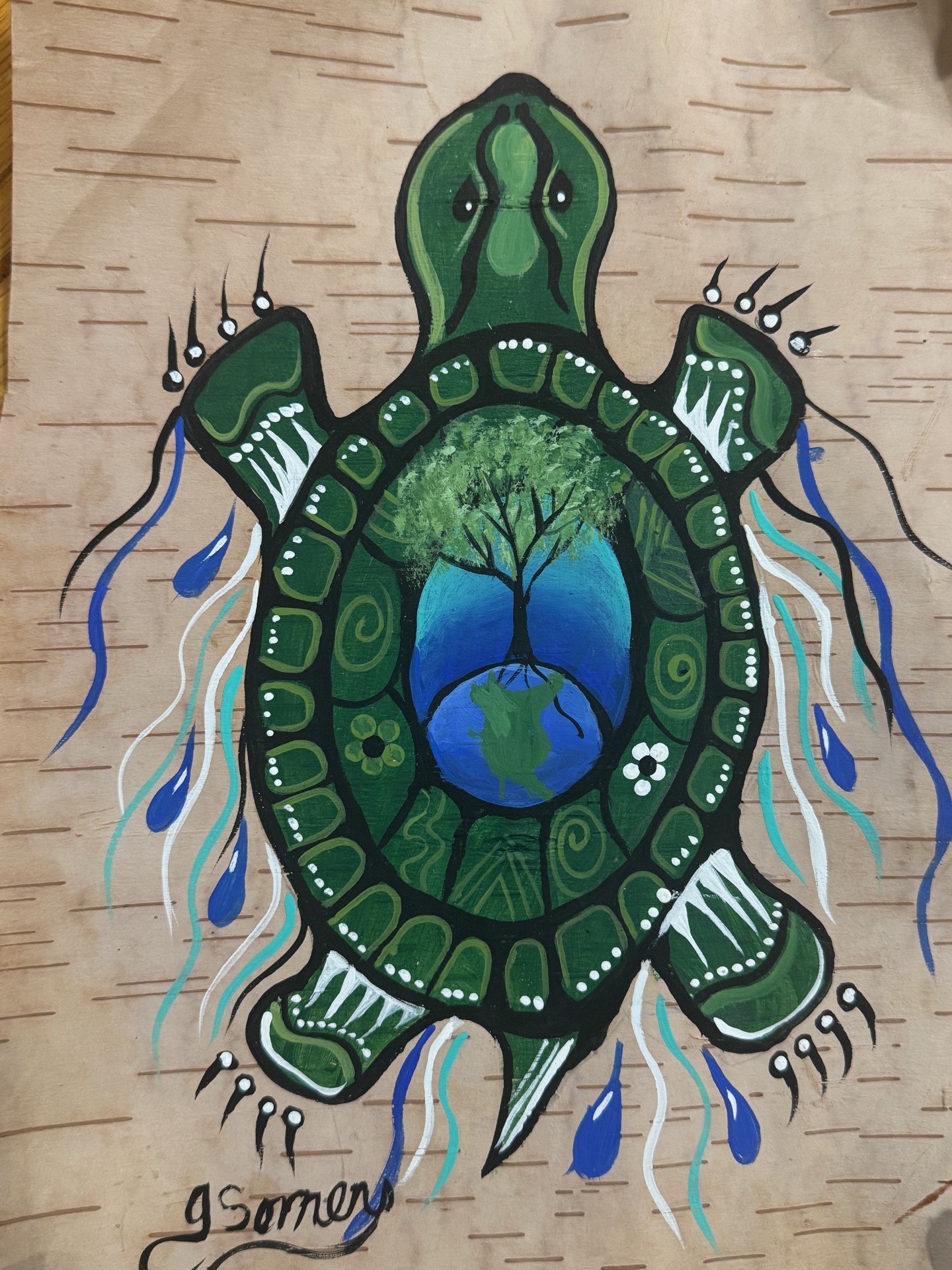
Students learn the story of Turtle Island, where the land is carried on Turtle’s back, reminding us that the Earth is supported through care, patience, and balance.
Shell Teachings
Turtle’s shell is explored as a natural calendar:
• 13 large plates representing the 13 moons
• 28 smaller segments representing lunar days and women’s cycles
These teachings introduce Indigenous timekeeping and natural cycles in an age-appropriate way.
The Tail Teaching
Students learn that Turtle never lifts its tail. Wherever Turtle goes, the tail leaves a trace behind.
This teaching reminds us that:
• Every step leaves a mark
• Every action has impact
• Our choices affect the next seven generations
Turtle teaches patience, responsibility, and thinking beyond the present moment.
After this storytelling portion, students understand cycles, impact, and ancestral responsibility in a clear and meaningful way.
Land-Based Learning (Optional Component)
When space and weather allow, students step outside for a grounded land-based experience.
Activities may include:
• Standing with feet on the ground, reflecting on “standing on the turtle’s back”
• Observing land cycles such as moon phases, weather, and seasons
• Looking for tracks in snow or mud and discussing how movement leaves stories behind
Reflection questions may include:
“What traces do we leave on the Earth?”
This experience helps students connect footprints, choices, and responsibility to future generations.
Curriculum Integration
Kindergarten to Grade 2
• Patterns and shapes
• Nature stories
• Observation and listening
Grades 3 to 5
• Moon cycles
• Animal movement
• Ecosystems and habitats
Grades 6 to 8
• Indigenous timekeeping
• Generational thinking
• Environmental stewardship and responsibility
Art Methodology – Turtle Canvas Painting
The Art Project
Students create a Turtle painting that reflects Earth cycles and the path we leave behind.
Each student works on a canvas board or square canvas.
The art process includes:
• Drawing or tracing a Turtle outline
• Designing the shell with:
– 13 central plates
– 28 outer segments
• Adding a tail trail line behind the Turtle to represent our path and impact
Students paint:
• Moon cycles
• Seasons
• Personal symbols representing positive actions or responsibility
Optional metallic or highlighted lines may be added to the tail trail to symbolize future generations.
A Reflective and Meaningful Creative Process
Art-making is guided slowly and intentionally.
The finished artwork becomes a visual teaching tool that reflects cycles, responsibility, and legacy.
After the art session, students often feel grounded and proud of the story they have created.
Workshop Flow
A typical workshop follows this rhythm:
• Grounding activity focused on moving at the pace of the turtle
• Storytelling of Turtle Island and the tail teaching
• Outdoor land-based observation of tracks and cycles
• Turtle canvas painting session
• Closing circle where students share one positive “trace” or action they want to leave behind
Logistics and Booking Details
Length: 2.5 hours
Cost: $500 per workshop
Materials fee: $10 per student
All materials included.
This workshop offers a powerful exploration of cycles, responsibility, and the legacy we leave on Turtle Island.
Travel and accommodations are additional and discussed during booking.